Northern vs Southern Italy Cuisine: What Changes, and How to Spot What’s Authentic
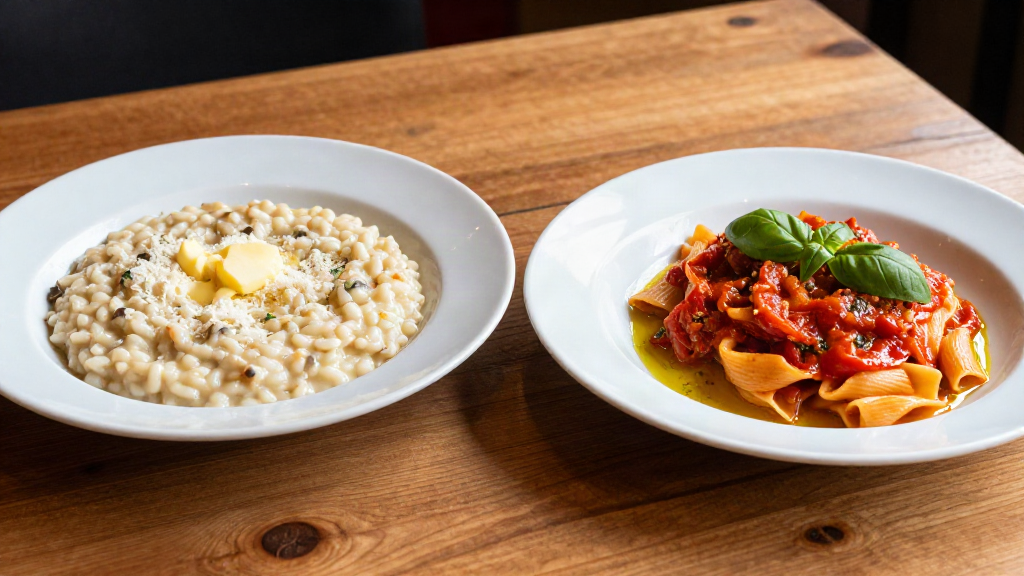
Ask ten people to describe Italy cuisine and you will get ten different answers. One will picture a creamy risotto in Milan, another a blistered Neapolitan pizza, another a plate of spaghetti alle vongole by the sea. All of them are right – and that is the point. Italian cooking is not one tradition but many, shaped by geography, climate and centuries of local identity. Understanding what changes between north and south is the fastest way to understand what “authentic” really means in an Italian restaurant.
One country, two kitchens
The single biggest force behind Italian food is geography. The north sits against the Alps, with cool air, rich pastures, rice paddies in the Po Valley and a long border with France, Austria and Switzerland. The south stretches into the Mediterranean, with sun, olive groves, citrus, tomatoes ripening on the vine and a coastline that has fed fishing villages for millennia.
That difference in land and climate produced two distinct grammars of cooking. Neither is more “Italian” than the other – but each has its own ingredients, techniques and signature dishes.
Northern Italian cuisine: butter, rice and slow braises
In the north, kitchens lean on butter, cream, rice, cornmeal and slow-cooked meats. The climate favors cattle and dairy, so Parmigiano-Reggiano, mascarpone, gorgonzola and fresh egg pasta are native here.
Signature ingredients: riso (short-grain rice for risotto), polenta, butter, cream, veal, beef, truffles from Alba, and hard aged cheeses.
Signature dishes: risotto alla milanese, polenta with braised meats, osso buco, bollito misto, tagliatelle al ragù, vitello tonnato, and fresh stuffed pastas like tortellini and ravioli.
Techniques: slow braising, rich reductions, and the constant stirring that gives risotto its texture. Portions of sauce tend to be restrained – the goal is balance, not abundance.
Southern Italian cuisine: olive oil, tomatoes and the sea
In the south, the grammar shifts to olive oil, tomatoes, dried pasta, vegetables and seafood. Sun and poor soil favored olives, tomatoes, eggplant, peppers and durum wheat – the flour behind dried pasta.
Signature ingredients: extra-virgin olive oil, San Marzano tomatoes, dried durum-wheat pasta, garlic, chili, capers, anchovies, mozzarella di bufala, and citrus from the Amalfi and Sicilian coasts.
Signature dishes: spaghetti alle vongole, pasta alla norma, pizza napoletana, parmigiana di melanzane, orecchiette con cime di rapa, and seafood grilled or simply dressed with oil and lemon.
Techniques: fast, high-heat cooking that preserves freshness. Sauces are built from few ingredients – tomato, oil, garlic, basil – and finished in the time it takes the pasta to cook.
Side-by-side: the key differences
- Fat: butter and cream in the north; extra-virgin olive oil in the south.
- Starch: rice and polenta in the north; dried durum-wheat pasta and bread in the south.
- Protein: veal, beef and cured meats in the north; fish, shellfish and vegetables in the south.
- Pasta: fresh egg pasta in the north; dried pasta in the south.
- Flavor profile: delicate, buttery, earthy in the north; bright, acidic, garlicky and spicy in the south.
- Cooking style: slow braises and reductions in the north; fast, fresh, minimal in the south.
Both traditions share the same non-negotiables: a short ingredient list, seasonal produce, and deep respect for regional craft. Those constants are what make Italian food recognizable – and what make imitations easy to detect.
How to spot an authentic kitchen from an imitation
The northern-versus-southern split gives you a practical checklist. When you sit down at a restaurant that claims to serve Italy cuisine, look for these signals:
- A defined regional identity. Authentic kitchens usually know where they come from – Neapolitan, Tuscan, Sicilian, Puglian. A menu that promises “all of Italy” usually delivers a shallow version of none of it.
- Correct pairings. Fresh egg pasta with a heavy northern ragù, dried pasta with a southern tomato sauce, risotto stirred to order. Mismatched pairings are a red flag.
- Restrained sauces. Real Italian sauces coat the pasta; they do not drown it. Oversized portions of sauce usually hide low-quality ingredients.
- Seasonal, named ingredients. San Marzano tomatoes, mozzarella di bufala, Parmigiano-Reggiano, cime di rapa – authenticity shows up in specificity.
- Texture discipline. Al dente pasta, creamy risotto, crisp pizza crust. Technique, not shortcuts, creates these results.
- A kitchen that can explain itself. Staff who can tell you why a dish belongs to a region are usually staff who care about getting it right.
Why the IFG standard matters
Knowing what to look for is one thing; confirming it is another. That is where certification does real work. The Italian Food Guide (IFG) Certification is an internationally recognized standard that verifies a restaurant’s adherence to authentic Italian practice – giving operators a credible way to prove what they already do, and giving diners and travelers a trusted signal they can rely on.
For owners and operators, certification is more than a plaque on the wall. It is an internationally recognized badge, an optimized profile on the Italian Food Guide, editorial and social promotion, SEO backlinks and ongoing marketing support – a way to stand out in a market crowded with restaurants making the same claims without the proof behind them.
The takeaway
Italy cuisine is not a single menu; it is a conversation between north and south, butter and olive oil, rice and wheat, mountains and sea. Understanding that difference helps you appreciate the food – and helps you tell a genuine Italian kitchen from one that only borrows the labels. When you want certainty, look for the places that can prove their authenticity, and for the certification that stands behind them.
Italian Food Culture
Follow us on your favorite social network and keep exploring stories, history and traditions of Italian cuisine.